
Technical certificates: permanent
Full-Stack Software Development, Cybersecurity, Cloud, Data and AI credentials are issued once and remain valid for life. No renewal fees. No expiration date on the certificate or the transcript.
Full-Stack Software Development, Cybersecurity, AI and Cloud certifications anchored to the Delaware Registry. Never expire. Always verifiable. Always transferable.

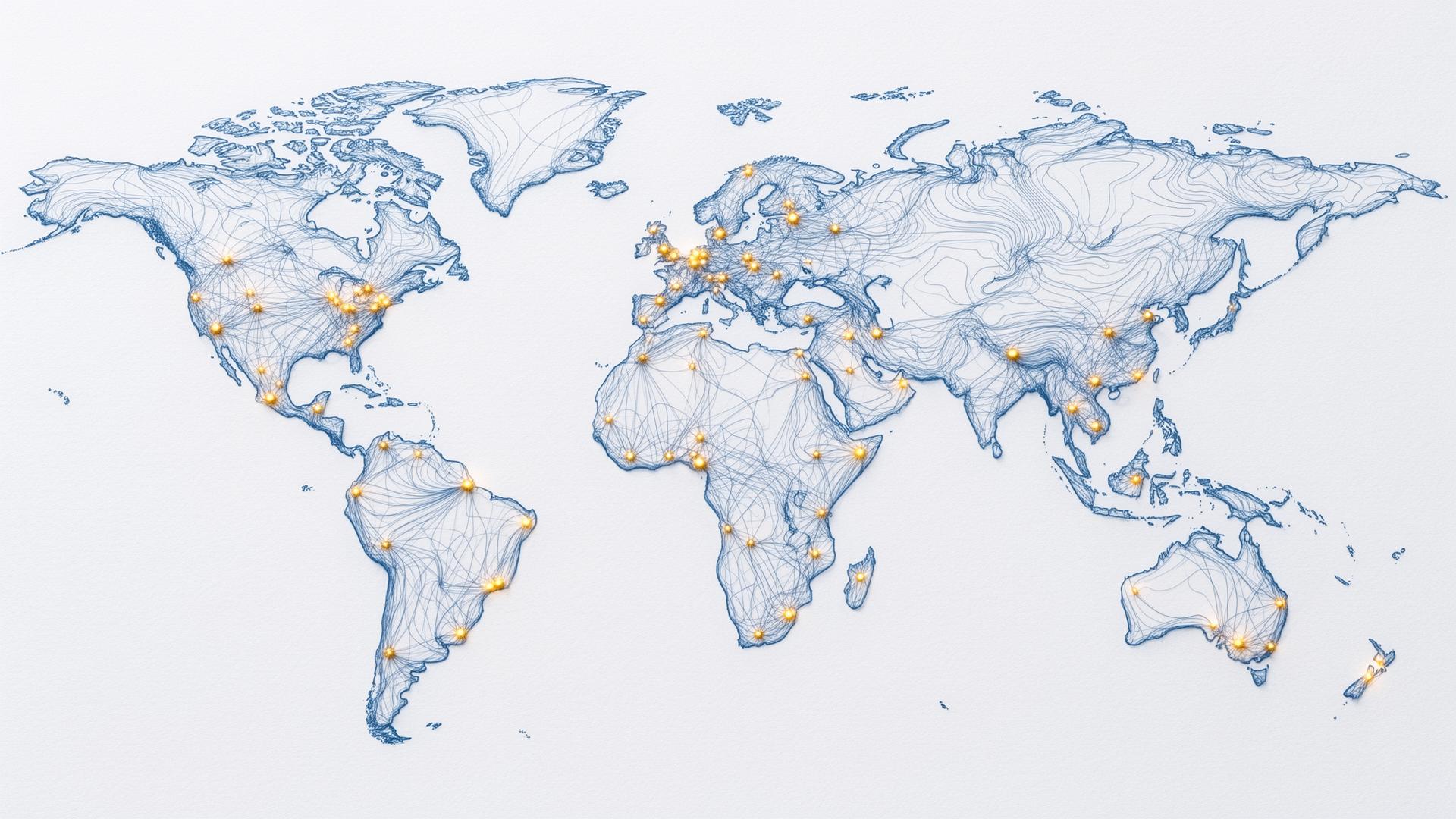
“We are not here to issue certificates. We track studies, refine talent, and pipeline verified graduates to partner universities and employers — refined, proven, and ready for intake.”
Every hour, module and assessment is recorded on a SHA-256 ledger.
1:12 mentorship, defended capstone, working portfolio.
Verified talent routed to partner universities and employers ready for intake.
From variables to deployed SaaS. Industry-sponsored capstone. ABET-aligned. Lifetime credential.
Learners build real projects daily and layer skills incrementally. Each spiral revisits the previous layer under harder constraints, so the final capstone is a running product with version history, tests and deployment — not a certificate of attendance.
A credential is a record of assessed work at a point in time. Once the evidence is cryptographically anchored, re-issuing it adds nothing but a renewal fee — so we do not charge one.
Full-Stack Software Development, Cybersecurity, Cloud, Data and AI credentials are issued once and remain valid for life. No renewal fees. No expiration date on the certificate or the transcript.
Teaching credentials renew every five years. Classroom standards, safeguarding rules and curriculum frameworks move, so teaching practice is re-evidenced on a fixed cycle. This is the only renewing credential class we issue.
Every certificate, transcript and competency map carries a SHA-256 hash and QR code. Anyone — employer, registrar, or AI assistant — can resolve that hash against our public verification endpoint at any time, forever.
Every credential maps to a published rubric and feeds the next rung. Learners can enter at any level and articulate forward.
Every module ships with a public capstone and transparent assessment. We don't list our internal catalogue here — the full module index lives inside the registry once you enroll.

Ten technical disciplines and two pedagogic tracks. Each module runs sixty hours across nine months and ends in a public capstone. Aligned with ABET / IEEE learning outcomes.
Honesty note: SWY issues a Professional Certificate aligned with ABET / IEEE learning outcomes. Where students wish to convert completed work into formal academic credit, articulation is handled on a case-by-case basis through partner institutions listed at /partners/universities.
A teacher-education programme built on the TPACK model — Technological, Pedagogical and Content Knowledge held in equal mastery — and benchmarked against the UNESCO ICT Competency Framework for Teachers, the ISTE Standards for Educators and the CSTA K–12 Computer Science Standards. Five mastery modules give the student-teacher subject depth far beyond the secondary curriculum, the pedagogic craft to teach it, and the technological fluency to lead a digital classroom — in any country, in any language, in any school system.
Built on the TPACK model — Technological, Pedagogical and Content Knowledge held in equal mastery. Student-teachers acquire subject depth beyond the secondary curriculum, the pedagogic craft to teach it, and the technological fluency to lead a digital classroom anywhere in the world.
Understand hardware architecture, OS internals and software classification at engineering depth — to troubleshoot labs and explain abstract concepts concretely.
Master information systems, AI, robotics and ethics to guide students through the societal role of IT.
Become a proficient programmer and database designer to teach coding, algorithms and the SDLC effectively.
Configure networks, troubleshoot connectivity and secure systems — well enough to teach networking with confidence.
Integrate all skills to solve complex real-world problems and manage ICT projects end-to-end.
Articulation note: this programme is benchmarked to UNESCO ICT-CFT (Knowledge Acquisition + Knowledge Deepening tiers), the TPACK framework, ISTE Educator Standards and CSTA K–12 Computer Science Standards, and is credited at Level 6 (45 ECTS) by SWY. Conversion into a professional teaching credential or BSc Ed. (ICT) is handled case-by-case under published articulation agreements with partner universities.
The BSc-depth track ends with a 12-week industry-sponsored project — replacing the old 100-hour capstone. Every learner ships a real system to a real sponsor and defends it before an external panel.
Learner is matched to an industry sponsor (start-up, NGO, public agency or SME). Joint scoping document signed by sponsor, learner and SWY tutor.
User research, data audit, system architecture proposal. Architecture review with the sponsor's CTO or designated technical lead.
Three two-week sprints with public sprint reviews. Code shipped to a sponsor-controlled repository. Weekly demo to the cohort circle.
Security review, performance testing, documentation, runbooks. Sponsor sign-off on acceptance criteria.
Defence before a panel of one academic, one industry and one SWY assessor. Public artefacts published to the learner's registry portfolio.
A 12-month spiral that revisits each core CSC topic at greater depth — technical theory, curriculum design, and educational research — culminating in a thesis and a public portfolio.
Spiral curriculum. Each core CSC topic is revisited at greater depth across technical theory, curriculum design, and educational research — moving the student from 'how to do it' to 'why it works, how to research it, and how to teach it'.
Honest framing: a Master's-level research project, not a doctoral thesis. Six months of dedicated research with mid-project review, public defence and an external assessor.
From 'using software' to 'analysing software ethics & system architecture'.
From 'writing loops' to 'algorithmic complexity & computational theory'.
From 'coding in C/Pascal' to 'compiler design & software-engineering research'.
From 'logic gates' to 'processor design & parallel computing'.
From 'setting up LANs' to 'protocol analysis & cybersecurity forensics'.
From 'MS Access tables' to 'big data, NoSQL & database administration'.
Open the 6-month Capstone Research Project. Choose method, scope question, secure ethics approval.
Build the theoretical scaffolding. Produce a publishable design artefact alongside the research.
Run the study. Collect, code and clean the evidence base.
Turn the dataset into a defensible thesis chapter set.
Public defence and registry-anchored portfolio.
Honesty note: SWY confers a Master’s-level professional credential (60 ECTS, Level 7 EQF-aligned). National recognition as a state Master’s degree is handled case-by-case with partner universities through the articulation registry.
A great syllabus only works if real people are reachable, often. Here is the mentorship density and cohort architecture you get with every SWY cohort — published, not promised in a sales call.
Six-learner circles meet weekly to peer-review code, lesson plans and capstone progress. Facilitated by a senior alum.
Open async forum + weekly live studio with practising engineers, teachers and researchers. Mentors commit a minimum of 4 hours per cohort week.
Capstones and theses are defended before a panel that always includes one external assessor (university, ministry or industry).
Graduates remain in the registry; mentees can be matched to alumni working in their target country or sector.
Mentor hours and cohort sizes are contractually committed per cohort and audited at graduation. If a cohort fails to receive its committed hours, learners receive partial fee credit toward the next program.
Every SWY credential is assessed against the rubric below before it is anchored in the registry. Weights are fixed; level descriptors are public; defence panels apply them on the record.
Architecture quality, code quality, test coverage, performance.
Did the sponsor sign acceptance? Was the brief delivered?
Sprints, ADRs, code review, security review.
Clarity, response to challenge, technical depth.
Runbook, user manual, ADRs, security review.
Most online programs are vague about the line between alignment and accreditation. We publish ours. Read this before you enroll, sponsor a learner, or sign an articulation agreement.
Learners from 90 band nations claim a 25% merit scholarship and co-invest the remaining 75% — proving commitment and protecting credential value. Verified against national tertiary-exam registries (HND, BTS, Diplomas, first degrees).
StudyWithYou welcomes learners from all over the globe; 90 countries are eligible for scholarship grants based on fee reduction. Secondary and high-school exams are not a gateway — only 2–3 year national tertiary diplomas (HND, BTS, DTS, D3, Associate, Tecnólogo, Cao Đẳng) or recognised first degrees qualify.
Verified against the issuing body's public register.
Learner co-investment on tuition, in USD
Merit Scholarship (Sovereign Exam Gateway)
Countries eligible for scholarship grants
| Country | Recognised tertiary credential | Region | Scholarship |
|---|---|---|---|
| Benin | BTS / DUT (BTS) | Africa | Pay 75% · claim 25% |
| Botswana | Diploma (BICA / technical colleges) (DIP) | Africa | Pay 75% · claim 25% |
| Burkina Faso | BTS / DUT (BTS) | Africa | Pay 75% · claim 25% |
| Cameroon | Higher National Diploma / Brevet de Technicien Supérieur (HND/BTS) | Africa | Pay 75% · claim 25% |
| Côte d'Ivoire | BTS (BTS) | Africa | Pay 75% · claim 25% |
| DR Congo | Graduat / Licence (ESU system) (GRAD) | Africa | Pay 75% · claim 25% |
| Ethiopia | TVET Diploma Level 5–6 / First Degree (TVET5) | Africa | Pay 75% · claim 25% |
| Gabon | BTS / DUT (BTS) | Africa | Pay 75% · claim 25% |
| Ghana | HND / Diploma (Technical Universities) (HND) | Africa | Pay 75% · claim 25% |
| Guinea | BTS / DUT (BTS) | Africa | Pay 75% · claim 25% |
| Kenya | Diploma / Higher Diploma (TVET) (DIP) | Africa | Pay 75% · claim 25% |
| Malawi | Diploma (MCTE / TEVETA) (DIP) | Africa | Pay 75% · claim 25% |
| Mali | BTS / DUT (BTS) | Africa | Pay 75% · claim 25% |
| Mozambique | Diploma de Técnico Superior (DTS) | Africa | Pay 75% · claim 25% |
| Namibia | Diploma (NQA-registered) (DIP) | Africa | Pay 75% · claim 25% |
| Niger | BTS / DUT (BTS) | Africa | Pay 75% · claim 25% |
| Nigeria | National Diploma / Higher National Diploma (ND/HND) | Africa | Pay 75% · claim 25% |
| Rwanda | A1 Diploma / HVE (IPRC) (A1) | Africa | Pay 75% · claim 25% |
| Senegal | BTS / DUT (BTS) | Africa | Pay 75% · claim 25% |
| Sierra Leone | Diploma (NCTVA / Polytechnic) (DIP) | Africa | Pay 75% · claim 25% |
| South Africa | National Diploma (DHET) (NDIP) | Africa | Pay 75% · claim 25% |
| Tanzania | Technician / Diploma (NACTE) (DIP) | Africa | Pay 75% · claim 25% |
| Togo | BTS / DUT (BTS) | Africa | Pay 75% · claim 25% |
| Uganda | Diploma (UBTEB / NCHE-registered) (DIP) | Africa | Pay 75% · claim 25% |
| Zambia | Diploma (TEVETA / ZAQA) (DIP) | Africa | Pay 75% · claim 25% |
| Zimbabwe | Higher Diploma / Diploma (HITEC) (HDIP) | Africa | Pay 75% · claim 25% |
| Argentina | Tecnicatura Superior / Licenciatura (TEC) | LATAM | Pay 75% · claim 25% |
| Bahamas | Associate Degree / Diploma (AD) | LATAM | Pay 75% · claim 25% |
| Barbados | Associate Degree / Diploma (AD) | LATAM | Pay 75% · claim 25% |
| Belize | Associate Degree (AD) | LATAM | Pay 75% · claim 25% |
| Bolivia | Técnico Superior / Licenciatura (TS) | LATAM | Pay 75% · claim 25% |
| Brazil | Tecnólogo (2–3 yr higher tech degree) / Bacharelado (TEC) | LATAM | Pay 75% · claim 25% |
| Chile | Técnico de Nivel Superior (TNS) | LATAM | Pay 75% · claim 25% |
| Colombia | Tecnólogo (SNIES) (TEC) | LATAM | Pay 75% · claim 25% |
| Dominican Rep. | Técnico Superior / Licenciatura (TS) | LATAM | Pay 75% · claim 25% |
| Ecuador | Título de Técnico Superior / Licenciatura (TS) | LATAM | Pay 75% · claim 25% |
| El Salvador | Técnico / Licenciatura (TEC) | LATAM | Pay 75% · claim 25% |
| Guatemala | Técnico Universitario / Licenciatura (TU) | LATAM | Pay 75% · claim 25% |
| Guyana | Associate Degree / Diploma (AD) | LATAM | Pay 75% · claim 25% |
| Haiti | Licence (first degree) (LIC) | LATAM | Pay 75% · claim 25% |
| Honduras | Técnico Universitario / Licenciatura (TU) | LATAM | Pay 75% · claim 25% |
| Jamaica | Associate Degree / Diploma (tertiary) (AD) | LATAM | Pay 75% · claim 25% |
| Mexico | Técnico Superior Universitario (TSU) | LATAM | Pay 75% · claim 25% |
| Nicaragua | Técnico Superior / Licenciatura (TS) | LATAM | Pay 75% · claim 25% |
| Paraguay | Técnico Superior / Licenciatura (TS) | LATAM | Pay 75% · claim 25% |
| Peru | Bachiller Universitario / Título Técnico (BACH) | LATAM | Pay 75% · claim 25% |
| Trinidad & Tobago | Associate Degree / Diploma (AD) | LATAM | Pay 75% · claim 25% |
| Venezuela | Técnico Superior Universitario (TSU) | LATAM | Pay 75% · claim 25% |
| Albania | Diploma (2-yr) / Bachelor (first degree) (BSC) | Europe | Pay 75% · claim 25% |
| Armenia | Bachelor (first degree) / Specialist Diploma (BSC) | Europe | Pay 75% · claim 25% |
| Azerbaijan | Bachelor (first degree) / Diploma (BSC) | Europe | Pay 75% · claim 25% |
| Belarus | Specialist Diploma (first degree) (SPEC) | Europe | Pay 75% · claim 25% |
| Bosnia & Herz. | Viša škola Diploma (2-yr tertiary) (VSD) | Europe | Pay 75% · claim 25% |
| Georgia | Bachelor (first degree) (BSC) | Europe | Pay 75% · claim 25% |
| Kosovo | Diploma (Kolegj) / Bachelor (DIP) | Europe | Pay 75% · claim 25% |
| Moldova | Diploma de Studii Superioare / Bachelor (DSS) | Europe | Pay 75% · claim 25% |
| Montenegro | Viša škola Diploma (VSD) | Europe | Pay 75% · claim 25% |
| North Macedonia | Higher Education Diploma / Bachelor (HEP) | Europe | Pay 75% · claim 25% |
| Serbia | Viša škola Diploma / Bachelor (VSD) | Europe | Pay 75% · claim 25% |
| Ukraine | Junior Specialist Diploma / Bachelor (JRSP) | Europe | Pay 75% · claim 25% |
| Afghanistan | Bachelor (first degree) (BSC) | Asia | Pay 75% · claim 25% |
| Bangladesh | Diploma (BTEB Polytechnic) / Bachelor (DIP) | Asia | Pay 75% · claim 25% |
| Bhutan | Diploma (RUB) / Bachelor (DIP) | Asia | Pay 75% · claim 25% |
| Cambodia | Associate Degree / Diploma (HE) (AD) | Asia | Pay 75% · claim 25% |
| India | Diploma (Polytechnic) / Bachelor's first degree (DIP) | Asia | Pay 75% · claim 25% |
| Indonesia | Diploma D3 (3-yr tertiary) (D3) | Asia | Pay 75% · claim 25% |
| Iraq | Diploma (Technical Institute) / Bachelor (DIP) | Asia | Pay 75% · claim 25% |
| Jordan | Community College Diploma (2-yr) / Bachelor (CCD) | Asia | Pay 75% · claim 25% |
| Kyrgyzstan | Diploma (SVE) / Bachelor (DIP) | Asia | Pay 75% · claim 25% |
| Laos | Diploma (post-secondary) (DIP) | Asia | Pay 75% · claim 25% |
| Lebanon | BTS / Licence (first degree) (BTS) | Asia | Pay 75% · claim 25% |
| Mongolia | Diploma (TVET) / Bachelor (DIP) | Asia | Pay 75% · claim 25% |
| Myanmar | Diploma (Technological Universities) (DIP) | Asia | Pay 75% · claim 25% |
| Nepal | Diploma (CTEVT) / Bachelor (DIP) | Asia | Pay 75% · claim 25% |
| Pakistan | DAE (Diploma of Associate Engineer) / Associate Degree (DAE) | Asia | Pay 75% · claim 25% |
| Philippines | Diploma (TESDA) / Bachelor (DIP) | Asia | Pay 75% · claim 25% |
| Sri Lanka | Diploma / Higher Diploma (NVTI) (HDIP) | Asia | Pay 75% · claim 25% |
| Syria | Diploma (Higher Institutes) / Bachelor (DIP) | Asia | Pay 75% · claim 25% |
| Tajikistan | Diploma (SVE) / Bachelor (DIP) | Asia | Pay 75% · claim 25% |
| Uzbekistan | Diploma (College/Institute) / Bachelor (DIP) | Asia | Pay 75% · claim 25% |
| Vietnam | Cao Đẳng (College Diploma) (CDC) | Asia | Pay 75% · claim 25% |
| Yemen | Diploma (Institute) / Bachelor (DIP) | Asia | Pay 75% · claim 25% |
| Algeria | DEUA / Licence (DEUA) | MENA | Pay 75% · claim 25% |
| Djibouti | BTS / Licence (BTS) | MENA | Pay 75% · claim 25% |
| Egypt | Bachelor / Technical Institute Diploma (BSC) | MENA | Pay 75% · claim 25% |
| Mauritania | BTS / Licence (BTS) | MENA | Pay 75% · claim 25% |
| Morocco | DTS (Diplôme de Technicien Spécialisé) / Licence (DTS) | MENA | Pay 75% · claim 25% |
| Palestine | Diploma (Community Colleges) / Bachelor (DIP) | MENA | Pay 75% · claim 25% |
| Sudan | Diploma (Higher Institutes) / Bachelor (DIP) | MENA | Pay 75% · claim 25% |
| Tunisia | DTS (Diplôme de Technicien Supérieur) / Licence (DTS) | MENA | Pay 75% · claim 25% |
Alliance network expanding Q4 2026. Verified partners listed below.
Partnerships are cryptographically verified. Unlisted institutions are under active negotiation.
Technical certificates never expire. Full-Stack Software Development, Cybersecurity, Cloud, Data and AI credentials are issued once and remain valid for life. Pedagogic (teaching) certificates renew every five years so classroom practice stays current.
StudyWithYou is a Delaware-registered vocational registry with an ABET/IEEE outcome-mapped curriculum. It is not a regionally accredited degree-granting institution; credit travels through published articulation agreements with partner universities.
Yes, through verified articulation agreements published in our public registry. Each credential carries a SHA-256 anchored transcript and competency map that registrars can verify directly.
Every certificate, transcript and competency map carries a SHA-256 hash and QR code. Entering the hash on the public verification page — or scanning the QR code — returns the issuance record instantly. No forged PDF can pass this check.
540 training hours equivalent to 30 ECTS, a 1:12 mentor ratio, a 70% test-coverage requirement, operating-system internals and distributed systems content, and an industry-sponsored capstone defended before an employer panel.
Browse programs and country nodes.
Submit identity and intent.
We match you to a cohort and mentor.
Verified outcome travels with you.
Reserve a place in the next country cohort. We respond within five business days.
Write directly to the office that owns your request. Each mailbox is monitored by a named officer in Wilmington, Delaware or Helsinki, Finland.
General questions about StudyWithYou, programmes, credentials and how the registry works.
Applications, cohort seats, scholarships, tuition plans and learner onboarding.
Certificate issuance, transcripts, credential corrections and verification records.
Universities, employers, articulation agreements and institutional collaboration.
Academic architecture, curriculum standards, integrity escalations and press.